Today I wanted to share with you my latest learned knitting skill Entrelac and boy do I love it. At the time of making this post it is high summer here, and outdoor living is commanded by oppressive heat and chocking humidity, so air-conditioning and knitting are on full blast right now. But as is common with makers such as myself, not one of the wips I have going at the moment is holding my fancy, and I’m craving that new skilled up feeling of trying something I’ve never done before. So to a languishing Craftsy account I searched for anything that would speak to me.
I’m not sure why I’ve avoided Entrelac until now, I seem to find new techniques just when I need them, but that said I am a hungry learner and my skill set is a little bloated with things I may never use. What drew me to Entrelac is the amazing texture it creates in the fabric and a sudden need to know how it is made. And as it turns out, it’s not as mind bending as it looks. But it’s not straight forward either, which is why I’m grateful for Gwen Bortner’s classes, and why I found myself casting on before the end of her second tutorial.
What I Enjoyed About Entrelac: Where most other knitting styles are knit is rows or rounds, Entrelac is knit in units or blocks which you might think of as sort of short rows. This is what I find really fun as it is a total novelty, as is one of the techniques Gwen suggests to use as an accompaniment to Entrelac – knitting in the opposite direction. You can imagine all these little squares of knitting with less than a dozen stitches across and having to turn your work several hundreds of times in a project (no thanks), knitting in the opposite direction means that you don’t have to turn your work, ever (yes, ever). Normally when we (righthanded) knit rows, we knit from our left needle onto our right needle and then turn our work to the wrong side and do a “wrong side row”. But I have started on a new adventure, knitting from my left needle onto my right needle and then instead of turning, knitting from my right needle onto my left needle (truly). It’s a bit fiddley at first to get the action of “purling without purling” but once you get the rhythm, it speeds up the knitting process of Entrelac and withholds the associated pain of the repetitive motion of turning – Thank you Gwen Borter!
What I Found Odd About Entrelac: To make the beautiful texture of Entrelac you need to work these units/blocks on an angle, one row is right leaning, the next row is left leaning, but I twisted my brain a little when I got this confused. I picked up my knitting for a new session and maybe I was a bit tired or just not paying attention, because I had started a new round but had forgotten to change direction! It wasn’t long til I realised my mistake because my fabric did not look right. This was a lesson in always reading my fabric before I start, but with a teensy bit of reverse knitting I was back on track.
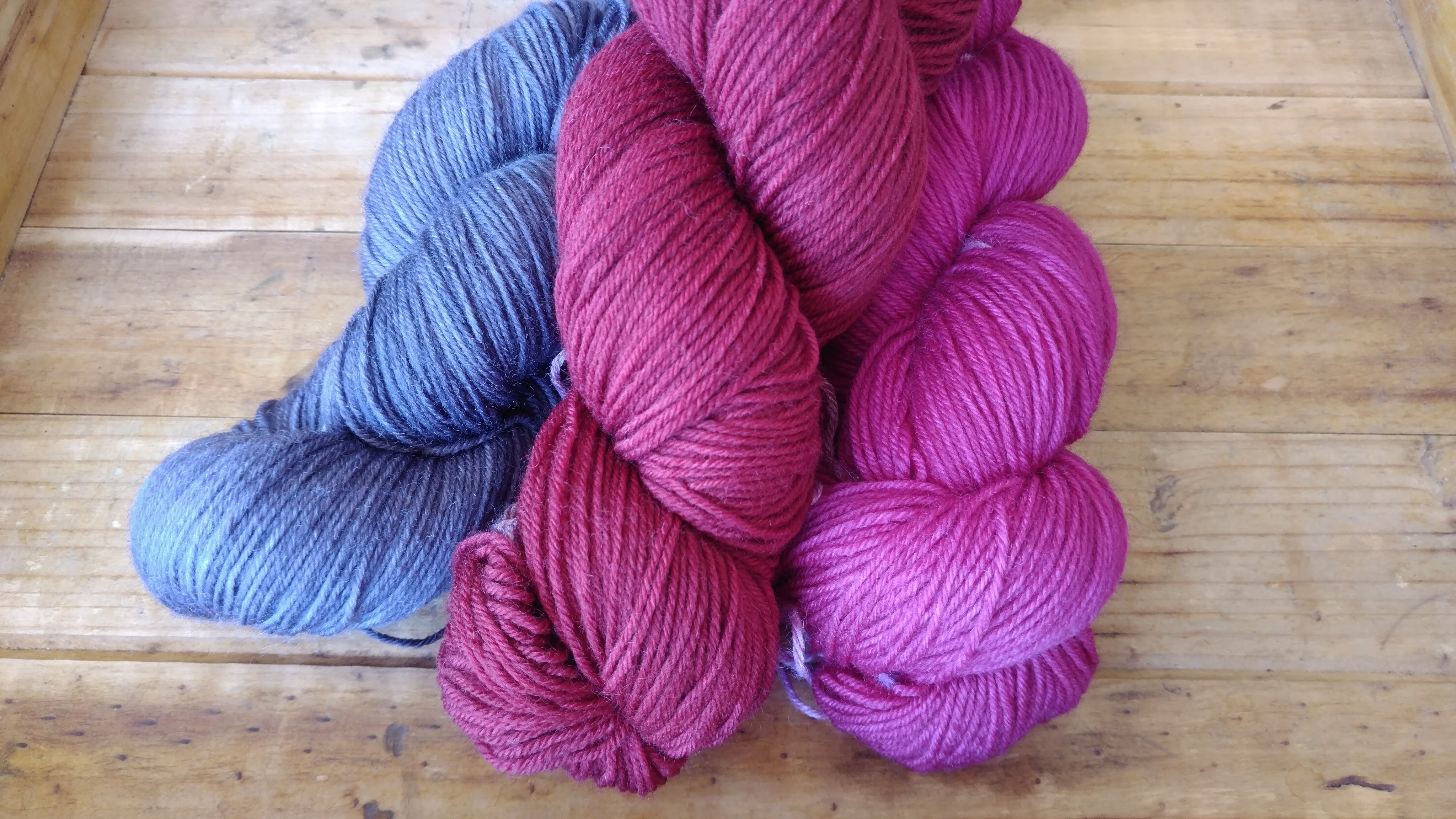
What I Found Surprising About Entrelac: To make the first time knitting Entrelac easier, I knitted each row in a contrasting yarn. This made the rows stand out from each other and problems more noticeable to rectify. So each unit is attached to a unit in the row below using a purl two together or a slip slip knit at the end of every second short row. Using this method the fabric is knitted in units, in rows and seamlessly, but ends up looking like it was knit in the round. That last sentence may have hurt your head a little but it’s true, you work the units in rows one unit at a time and when you get to the end of the row, change yarn and then start the new row knitting back in the opposite direction (left learning units in one row then right leaning units back across). So using the joining stitches p2tog and ssk this cowl that I made knit up seamlessly and felt like I was knitting in the round on my circular needles.
So I’ve knit a cowl in pure Entrelac, no ribbing, no shaping. But as I was knitting, my mind was thinking up new ways to incorporate Entrelac into projects as a beautiful feature. Perhaps a cuff of Entrelac on a cardigan, or even used as the patterning in some saddles of the shoulders on a lovely sweater. Maybe something small to start with, an entrelac beanie with a ribbed band that is synched at the crown and a pompon on top? I think what I should really do is the last projects in Gwen Bortner’s Craftsy Class that is a Entrelac Cape, I think I need a Fabulous Cape to show off this winter, and hopefully I have hooked you onto my new knitting diversion. So I suggest you go into you craft room and find a Entrelac pattern in one of the many knitting books you own and go on an Entrelac knitting adventure of your own.

 Catherine Hunt - Fibre Artisan